Pages

Showing posts with label culture. Show all posts

Wednesday, March 07, 2012

Global cooling? The Sun? AGW melts away with new data


A very interesting piece from Canada's National Post! 

Lorne Gunter: For climate cues, look to the sun

 Mar 7, 2012 – 7:00 AM ET Last Updated: Mar 6, 2012 5:06 PM ET
HO/AFP/Getty Images
HO/AFP/Getty Images


Ottawa’s giant skating rink on the Rideau Canal was closed in February due to thin ice caused by unseasonably mild temperatures. Yet, at the same time, ice blocked the canals of Venice for the first time in recent memory as temperatures in the exquisite Italian city dropped to -10C for more than a week. In the Netherlands, canals were closed to commercial boat traffic because ice made them unnavigable — another unusual development.
Also in early February, fountains in southern France froze over. Polish rail lines were chocked with metres of snow. Swiss villages were cut off by record accumulations this winter. In Japan, tens of thousands of residents were confined to their homes because there was too little removal equipment to clear all the white stuff. At one point three weeks ago, more than 140,000 people worldwide were reportedly stranded by snow.
So which is likely to be the new norm: North America’s mild winter, or Europe’s and Asia’s cold, snowy season?
To hear climate alarmists and environmentalists tell it, the world will soon be without winter. There will be no more backyard skating rinks or Arctic sea ice to sustain the polar bears. Snow will become a rarity in much of Europe, and tornados such as the ones that devastated large swaths of the American Midwest last weekend will become more commonplace.
But that’s not what some solar physicists are predicting.
Scientists who have made careers of studying the sun warn that our star is about to enter a less-active phase — a solar minimum that could last 30 years or longer. If that happens, some physicists see a worldwide return to the temperatures of the Little Ice Age (LIA). Not coincidentally, the deepest part of the LIA — during the late 17th century — was the last time our sun generated as few sunspots and as little geomagnetic activity as it appears set to generate for the next few decades.
Solid records of the connection between solar activity and Earth’s temperatures go back at least 300 years. If so-called proxy records are included — evidence from tree rings and ice-core samples, for instance — then the connection is thousands of years old.
The sun-temperature connection only makes sense. Which is warmer, summer or winter? Daytime or night? A sunny day or a cloudy one?
Sometimes I wonder whether our Neolithic ancestors understood better than modern climate alarmists what warmed the Earth. They didn’t build monuments that marked the summer and winter solstices because they worried the soot from their cooking fires was dangerously warming the planet. They built Stonehenge and the Goseck Circle and others to ensure the declining sun of winter would come back and prompt the return of spring and the plants and animals they relied on for their subsistence.
For years, now, the global-warming establishment has tried to minimize the effects the sun has on weather and climate. For instance, rough drafts of the UN’s next five-year report on climate change (which are already circulating) apparently devote just a single sentence to the sun’s role as a “driver” of temperatures on Earth, while page after page after page obsesses on the carbon-dioxide-temperature theory.
The fact is, scientists have studied the sun so thoroughly for so long that they can forecast with about 85% confidence what will happen to our temperatures if the number of sunspots rises or lowers from one cycle to the next and if the sun’s geomagnetic activity strengthens or weakens. They even know the effect on temperatures if one solar cycle — typically about 11 years — is longer or shorter than the cycle before it. And by studying the forces at work deep inside the sun, they can estimate with accuracy the length of the next cycle or two. This gives them a good idea of the sun’s influence on climate for the next few decades.
According to a recent study by three Norwegian scientists — Jan-Erik Solheim, Kjell Stordahl and Ole Humlum — the sun’s current cycle has lasted so long that the next, due to begin any time now, will see a decline in temperatures of 0.63C. And that cycle is expected to last so long that the cycle after that will witness a temperature drop of 0.95C.
Given that the planet has warmed only about 0.7C or 0.8C over the past century, that means all the warming Earth has experienced since 1900 could be wiped out in the next solar cycle, and in the cycle after that temperatures could retreat to levels not seen since the 18th century.
Start idling your full-sized SUVs in your driveways now. The planet may need all the global warming it can get.


I guess that puts a pin in the AGW debate. I think I'll go for a drive! 

Tuesday, February 14, 2012

Militant Secularism

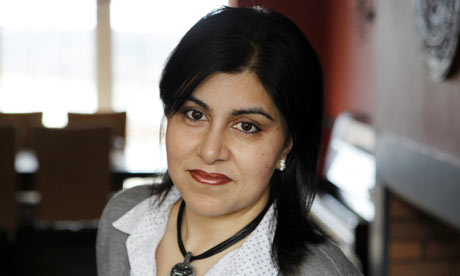
A fantastic piece by Britain's ONLY Muslim Peer (House of Lords) and the leader of the British delegation to the Holy See. The piece, found in the Telegraph, is about the deracination and division of British and European culture caused by secular extremism.
Sure to rock a few rock-head's boats.
Enjoy!


Today I have the honour of leading the largest ministerial delegation from the United Kingdom to the Vatican – our reciprocal visit following the momentous State Visit of His Holiness Pope Benedict XVI in September 2010.
We will be celebrating the decision Margaret Thatcher took 30 years ago to restore full diplomatic relations between our countries. The relationship between the UK and the Holy See is our oldest diplomatic relationship, first established in 1479. And today, thanks to the great success of the Pope’s visit, it is one of the strongest too.
But this trip is about more than a Valentine’s Day “love in” with our Catholic neighbours. This is about recognising the deep and intrinsic role of faith here in Britain and overseas. For a number of years I have been saying that we need to have a better understanding of faith in our country. Why? Because I profoundly believe that faith has a vital and important role to play in modern society. But mistakenly, faith has been neglected, undermined – and yes, even attacked – by governments in recent years.
When I met the Holy Father in 2010 he told me that he had heard what I had been saying and urged me to carry on making my case robustly. So today, I am taking a renewed message to the Vatican City; one which I want to ring out beyond the Vatican walls.
I will be arguing that to create a more just society, people need to feel stronger in their religious identities and more confident in their creeds. In practice this means individuals not diluting their faiths and nations not denying their religious heritages.
This is a message I’ve delivered on these pages before. But today I will be taking the argument one step further. I will be arguing for Europe to become more confident and more comfortable in its Christianity. The point is this: the societies we live in, the cultures we have created, the values we hold and the things we fight for all stem from centuries of discussion, dissent and belief in Christianity.
These values shine through our politics, our public life, our culture, our economics, our language and our architecture. And, as I will say today, you cannot and should not extract these Christian foundations from the evolution of our nations any more than you can or should erase the spires from our landscapes.
My fear today is that a militant secularisation is taking hold of our societies. We see it in any number of things: when signs of religion cannot be displayed or worn in government buildings; when states won’t fund faith schools; and where religion is sidelined, marginalised and downgraded in the public sphere.
It seems astonishing to me that those who wrote the European Constitution made no mention of God or Christianity. When I denounced this tendency two days before the Holy Father’s State Visit in September 2010, saying that government should “do God”, I received countless messages of support. The overwhelming message was: “At last someone has said it”.
That so many people felt moved to write showed just how uneasy they were at the rising tide of secularism.
For me, one of the most worrying aspects about this militant secularisation is that at its core and in its instincts it is deeply intolerant. It demonstrates similar traits to totalitarian regimes – denying people the right to a religious identity because they were frightened of the concept of multiple identities.
That’s why in the 20th century, one of the first acts of totalitarian regimes was the targeting of organised religion.
Of course there is a crucial caveat to all of this. I am not calling for some kind of 21st century theocracy. Religious faith and its followers do not have the only answer. There will be times when politicians and faith leaders will disagree. What is more, secularism is not intrinsically damaging. My concern is when secularisation is pushed to an extreme, when it requires the complete removal of faith from the public sphere. So I am calling for a more open confidence in faith, where faith has a place at the table, though not an exclusive position.
When we look at the deep distrust between some communities today, there is no doubt that faith has a key role to play in bridging these divides. If people understand that accepting a person of another faith isn’t a threat to their own, they can unite in fighting bigotry and work together to create a more just world.
All the major religions ask their followers to stand up for their neighbours. Doing so doesn’t make you less of a Christian, less of a Jew, less of a Muslim – it makes you more of one.
So when I have my second audience with the Holy Father tomorrow afternoon, I will not just be looking back on his remarkable visit. I will be giving him my absolute commitment to continue fighting for faith in today’s society. I hope this is something we can share in and I hope it reinforces this extraordinary relationship between the UK and the Holy See.


The Baroness at a conference